

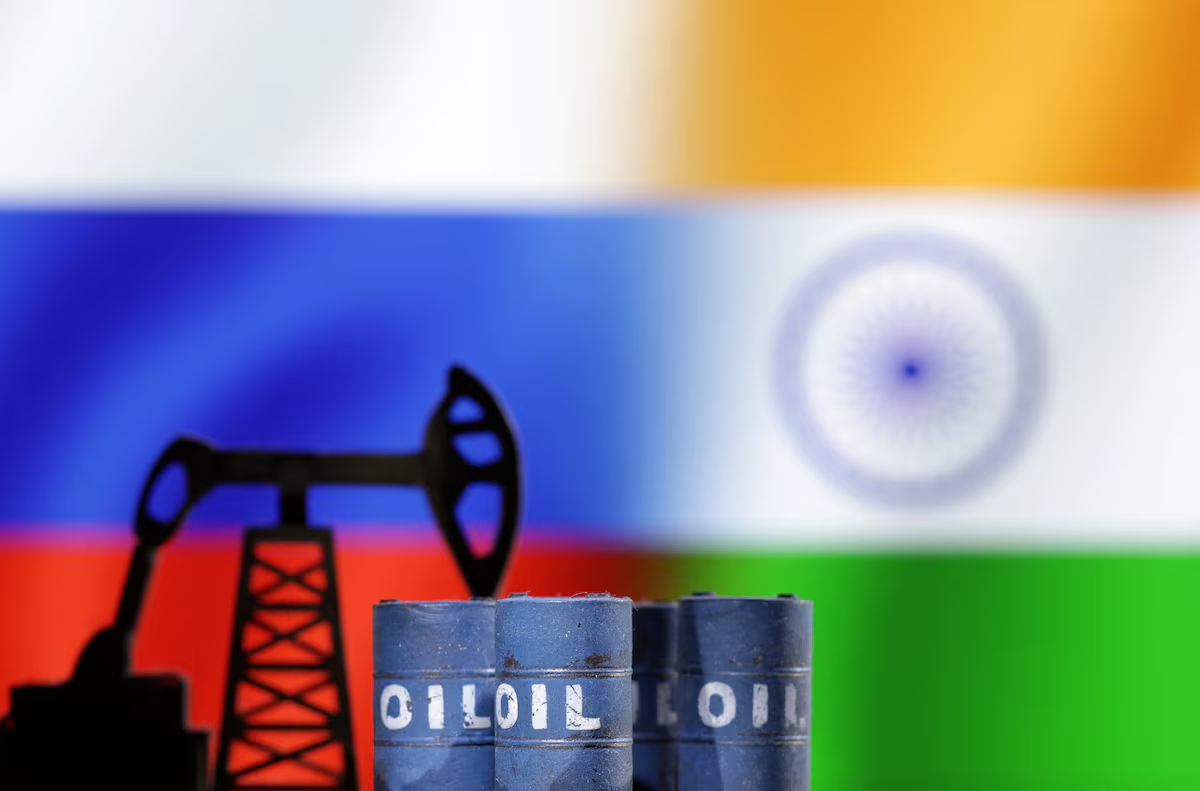
India’s continued purchase of Russian crude oil at discounted rates has emerged as a significant geopolitical and economic challenge, placing the country at a critical policy crossroads. While these imports have helped India manage energy security and control inflation, growing pressure from the United States over trade and tariffs is forcing New Delhi to reassess its strategic priorities.
Since the outbreak of the Russia–Ukraine conflict, India has sharply increased its intake of Russian oil, capitalizing on deep price discounts as Western nations-imposed sanctions on Moscow. This strategy has allowed India to reduce its overall import bill, stabilize domestic fuel prices, and protect economic growth during a period of global uncertainty. However, the same policy is now drawing scrutiny from Washington, which has hinted at the possibility of imposing higher tariffs on Indian exports if New Delhi continues to rely heavily on Russian crude.
Energy Security Versus Trade Relations

Energy security remains a core pillar of India’s economic strategy. As one of the world’s largest oil importers, India depends on external suppliers for more than 80 percent of its crude oil needs. Russian oil, offered at below-market prices, has provided a valuable buffer against volatility in global energy markets and has helped curb inflationary pressures at home.
At the same time, the United States is one of India’s largest trading partners and a key destination for Indian exports, including pharmaceuticals, engineering goods, textiles, and IT services. Any escalation in tariffs could significantly impact export competitiveness, slow growth in key sectors, and strain bilateral trade relations.
This creates a delicate balancing act for Indian policymakers: maintaining affordable energy supplies while safeguarding access to critical export markets. Trade experts argue that prolonged ambiguity in India’s position could weaken its negotiating leverage and expose the economy to broader trade risks.
Warning Signals From Trade Analysts

Trade think-tanks and policy analysts have cautioned that India’s current approach may not be sustainable in the long term. While purchasing Russian oil does not violate any international law, geopolitical realities mean that economic decisions are increasingly intertwined with strategic alignments.
The concern is that the United States could use tariffs as a tool to push India toward reducing its dependence on Russian energy. Such measures may not be limited to a single sector and could potentially extend to a wider range of Indian exports, amplifying the economic impact.
Analysts note that India’s export growth to the US has already shown signs of moderation in recent months. Any additional trade barriers could exacerbate this trend, affecting employment and investment in export-oriented industries.
Limited and Costly Alternatives
Reducing Russian oil imports is not a simple decision. Alternative suppliers from the Middle East, Africa, or the Americas often come at higher prices and may involve longer supply chains. A sudden shift could increase India’s import bill, put pressure on the rupee, and raise fuel prices domestically, with ripple effects across the economy.
Moreover, India’s refining sector has adapted well to processing Russian crude, and abrupt changes could disrupt operational efficiencies. Policymakers must therefore weigh short-term economic costs against long-term strategic considerations.
Geopolitical Complexity
India’s situation is further complicated by its broader geopolitical positioning. New Delhi maintains strategic partnerships with both the United States and Russia, while also navigating its role in multilateral forums and the Global South. Unlike some other major buyers of Russian oil, India faces unique scrutiny due to its expanding economic ties with the West.
Experts suggest that India may need to articulate a clearer and more consistent energy policy to its international partners. This could involve gradually diversifying crude sources, enhancing transparency in procurement, and integrating energy discussions into broader trade negotiations.
The Road Ahead
Going forward, India’s challenge lies in crafting a pragmatic strategy that preserves energy affordability without undermining its trade and diplomatic interests. Possible options include phased diversification of oil imports, leveraging trade talks to seek tariff relief, and strengthening domestic energy alternatives to reduce long-term dependence on imported crude.
Ultimately, the tariff threat over Russian oil is not just about energy procurement; it reflects the growing intersection of economics, trade policy, and geopolitics. How India responds will shape its global economic standing and strategic autonomy in the years ahead.

