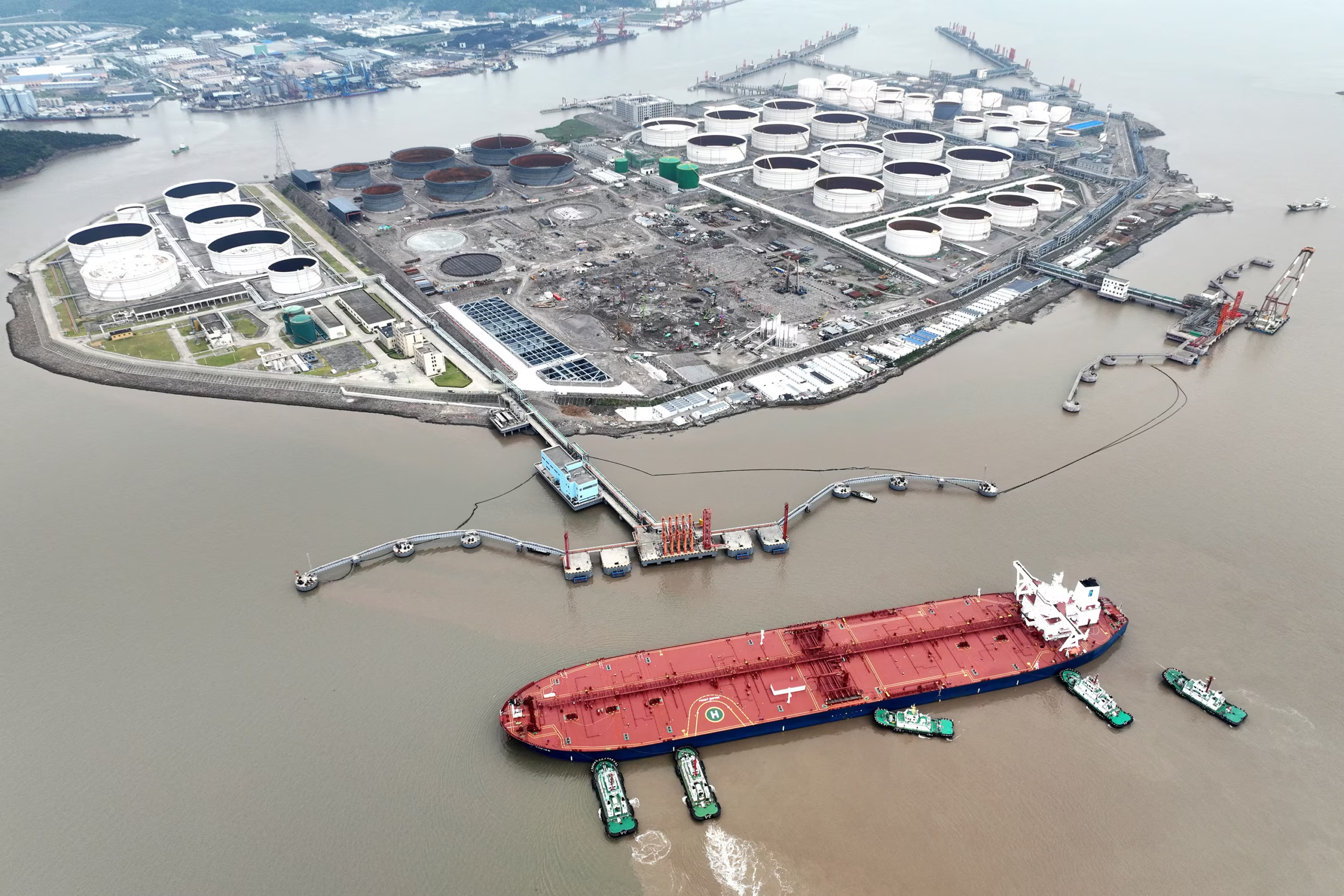
China has recorded unprecedented growth in crude oil imports in 2025, marking the highest annual intake in the nation’s history and underscoring its critical role in the global energy market. The world’s largest crude oil importer brought in a total of 557.73 million metric tons of crude oil last year, equivalent to an average of 11.55 million barrels per day (bpd), representing a notable year-on-year increase of 4.4%. This milestone reflects a combination of rising refinery throughput, strategic stockpiling, and favorable price conditions.
Record Monthly Imports and Peak Daily Rates
China’s import momentum culminated in December 2025, when seaborne crude oil arrivals reached 55.97 million metric tons, or approximately 13.18 million bpd, a 17% increase compared to December 2024. This figure not only marked the strongest monthly performance of the year but also broke previous daily import records. Analysts have highlighted this exceptional inflow as a clear indication of China’s intensified demand for energy supplies amid evolving global market dynamics.
Drivers of Import Growth: Refineries, Stocks, and Security

Several key forces have driven China’s surge in crude imports:
1. Higher Refinery Throughput
Chinese refineries operated at expanded capacity in 2025, processing larger volumes of crude to meet both domestic fuel needs and growing export demand for refined products. The increase in throughput played a substantial role in absorbing the uptick in imported crude, demonstrating robust operational activity across major refining hubs such as Guangdong and Shandong.
2. Strategic Stockpiling Initiatives
One of the most significant contributors to rising import volumes was China’s proactive stockpiling strategy. With global oil prices lower on average than in the previous year, Chinese state bodies and commercial entities took advantage of discounted crude to bolster both commercial and strategic reserves. Average daily inventory accumulation in 2025 reached about 430,000 bpd, up sharply from roughly 84,000 bpd in 2024, with expanded storage capacity fueling much of the increase.
3. Enhanced Energy Security Considerations
Rising geopolitical uncertainty has placed energy security at the forefront of Beijing’s planning. With global supply chains exposed to disruptions and shifting alliances, China has intensified efforts to secure long-term access to crude oil. This drive was evident in the record build-up of onshore stocks, as the government and major Chinese oil companies strengthened their fuel supply buffers.
Lower Prices Boost Refinery and Import Strategy
The global oil market in 2025 experienced price softness compared to the previous year, with average crude costs approximately $10 per barrel lower for buyers such as China. These lower price levels encouraged Chinese refiners and traders to increase spot purchases and restocking, benefiting from the arbitrage between market prices and long-term supply contracts. Lower prices also helped offset some of the financial pressures associated with higher import volumes and storage expenses.
Record Onshore Inventory Levels
In response to both active import strategies and market conditions, China’s onshore crude inventories climbed to all-time highs. By late December and early January, oil stocks exceeded 1.2 billion barrels, illustrating how aggressively imports were being accumulated not just for immediate refining use but also for longer-term strategic reserve purposes. Major storage facilities near key refining centers captured significant portions of these stored barrels.
Shifts in Source Dynamics and Supply Chains

While overall import volumes rose, the composition of crude sources also shifted during the year. Increased supplies from Russia were reported to offset reductions in other sources, reflecting China’s flexible approach to securing cost-effective oil. Imports from certain discount markets rose, even as some supplies from Iran saw relative declines amid more competitive offers from alternative exporters.
Broader Energy Import Trends
China’s broader energy import profile demonstrated nuanced developments in 2025 beyond crude oil. Natural gas imports, for example, saw growth during December, driven by rising demand for both pipeline gas and liquefied natural gas (LNG). While total gas import volumes for the year slightly decreased overall, the strong month-end performance indicated ongoing diversification in China’s energy mix.
Implications for Global Energy Markets
China’s record crude oil import levels in 2025 have significant implications for global energy markets. As one of the key demand centers, strong Chinese purchases helped support oil prices even amid abundant global supplies. The intensified restocking and inventory accumulation also mean that global crude flows may remain tight, with China’s strategies influencing price trends and trading flows across major producing regions.
Investors and policymakers will be closely monitoring China’s import patterns in 2026, particularly as the nation balances economic growth, environmental commitments, and energy security priorities. With refined products and petrochemical sectors continuing to expand, China’s role as a central player in global oil demand appears poised for continued significance.