Across Europe, North America, and other parts of the world, museums, universities, and private collections house vast numbers of African cultural artefacts and ancestral remains. Many of these objects were removed from the continent during the colonial era through force, coercion, deception, or deeply unequal power relations. For decades, they have been displayed or stored far from their places of origin, often stripped of their cultural meaning and treated as scientific specimens or artistic curiosities.
In recent years, global attention has increasingly focused on the ethical responsibility of institutions that continue to hold African heritage acquired under colonial rule. These discussions form part of broader debates around decolonization, historical accountability, cultural justice, and the need to address the enduring consequences of colonial violence. For African communities, however, calls for the return of their heritage are not new. They reflect long-standing demands for dignity, recognition, and the restoration of cultural continuity.
African artefacts and ancestral remains are not simply objects of historical interest. They embody identity, memory, spirituality, and living traditions. Masks, sculptures, ceremonial tools, and human remains are often connected to rituals, social structures, and belief systems that continue to shape community life today. When these items are removed from their cultural context, the loss extends far beyond the physical object it disrupts knowledge systems, erodes cultural practices, and severs intergenerational connections.
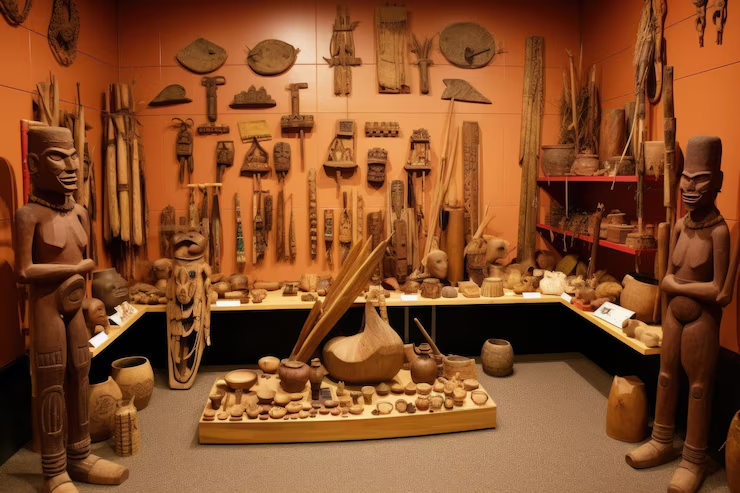
Within discussions about returning African heritage, two terms are often used interchangeably but carry distinct meanings: repatriation and restitution. Understanding this difference is essential for advancing meaningful and ethical outcomes.
Repatriation generally refers to the physical return of objects or remains to their place of origin. While this process can be important, it is often driven by institutions or governments and framed as an act of goodwill. In many cases, repatriation treats the return as a final transaction, without fully addressing how the items were acquired or the harm caused by their removal. This approach can unintentionally reinforce power imbalances, positioning institutions as decision-makers and communities as passive recipients.
Restitution, by contrast, places justice at the centre of the process. It acknowledges that many African artefacts and ancestral remains were taken through violent or unethical means and that their continued possession represents an ongoing injustice. Restitution is not merely about transfer of ownership; it involves recognition of wrongdoing, transparency about provenance, and genuine collaboration with descendant communities.
A restitution-focused approach requires institutions to engage directly with communities, respecting their authority to determine the future of their cultural heritage. This may involve decisions about reburial, ceremonial use, community-based conservation, or public display on local terms. In this sense, restitution restores agency and affirms the right of communities to define the meaning and care of their own heritage.
Importantly, restitution is a process rather than a single event. It involves emotional, cultural, and ethical labour. For communities, the return of ancestral remains can reopen wounds associated with historical trauma, displacement, and loss. For institutions, it requires confronting uncomfortable histories and reassessing long-standing practices in collecting, research, and exhibition. Yet this work is essential for building trust and fostering equitable relationships.
The return of African cultural artefacts also challenges outdated narratives that portray African societies as incapable of preserving their own heritage. Across the continent, museums, cultural centres, and traditional custodians are actively safeguarding heritage using both modern conservation techniques and Indigenous knowledge systems. Supporting restitution includes investing in local capacity, infrastructure, and skills, rather than using their absence as a justification for continued possession abroad.

From an international perspective, restitution aligns with evolving global standards on human rights, cultural property, and ethical stewardship. It reflects a growing recognition that cultural heritage cannot be separated from the people to whom it belongs. Returning African artefacts and ancestral remains contributes to healing historical injustices and enables more honest, inclusive representations of history.
Ultimately, the question is not whether African cultural heritage should be returned, but how the process can be conducted with integrity, respect, and justice. Restitution offers a pathway that goes beyond symbolic gestures, addressing the deeper legacies of colonialism while empowering communities to reclaim their past and shape their future. By embracing restitution, institutions can move from ownership to accountability, and from colonial inheritance to shared humanity.