

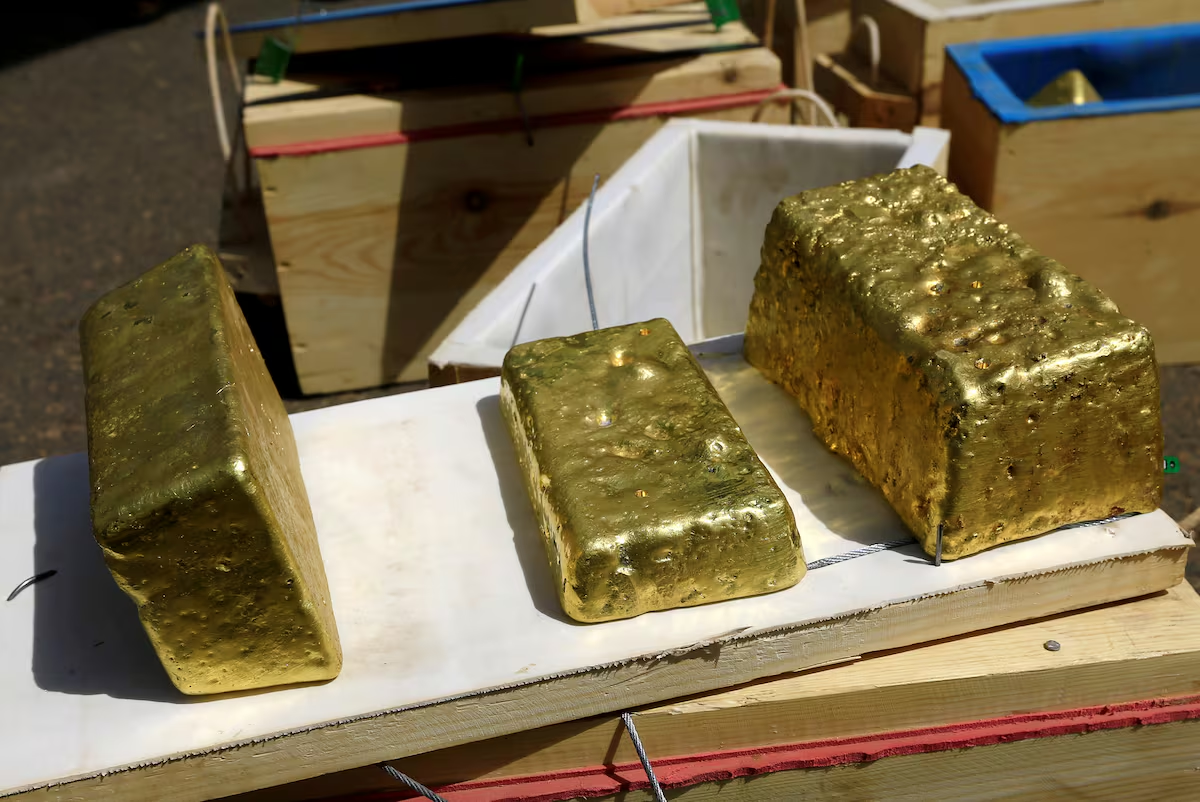
Sudan’s gold mining sector recorded a significant achievement in 2025, producing an estimated 70 metric tons of gold, exceeding official government targets and reaffirming the country’s position as one of Africa’s leading gold producers. This strong performance comes despite persistent political instability, infrastructure challenges, and the continued effects of armed conflict, highlighting the resilience and strategic importance of the mining industry to Sudan’s economy.
According to officials at the Ministry of Minerals, gold production in 2025 surpassed planned output levels by more than 10 percent, generating substantial public revenues and foreign exchange earnings at a time when the country faces severe fiscal constraints. Gold remains Sudan’s most valuable natural resource export and a critical pillar of national income, particularly following the loss of oil revenues after South Sudan’s independence.
Gold Mining as a Pillar of Sudan’s Economy
The Sudanese Mineral Resources Company (SMRC), the government body responsible for regulating and supervising the mining sector, reported that gold revenues in 2025 contributed more than one trillion Sudanese pounds to the state treasury. These funds have played an essential role in supporting basic government operations, stabilizing the national budget, and easing pressure on foreign currency reserves.
Gold mining accounts for a significant share of Sudan’s non-oil exports and employs hundreds of thousands of citizens directly and indirectly. The sector includes both large-scale industrial mining operations and a vast network of artisanal and small-scale miners, who collectively contribute the majority of national output. Despite limited access to modern equipment and financing, artisanal miners remain central to Sudan’s gold production landscape.
Resilience Amid Conflict and Economic Challenges
The achievement of 70 tons of gold production in 2025 is particularly notable given the difficult operating environment. Ongoing conflict has disrupted transportation routes, increased security risks, and constrained investment flows. Nevertheless, mining activities continued across several gold-rich regions, including Northern, River Nile, Red Sea, and parts of Darfur and Kordofan.
Government officials credited improved coordination between regulatory authorities, local administrations, and mining communities for maintaining production levels. Measures to enhance monitoring, regulate gold markets, and reduce smuggling also contributed to higher officially recorded output.
Addressing Gold Smuggling and Informal Trade

Gold smuggling remains one of the most significant challenges facing Sudan’s mining sector. Large volumes of gold have historically been exported through informal channels, depriving the state of revenues and weakening economic planning. In response, authorities have intensified efforts to formalize gold trade, strengthen border controls, and encourage miners to sell production through official channels.
The government has also expanded the use of centralized gold purchasing mechanisms and promoted transparent pricing linked to international markets. These initiatives aim to increase state revenue, improve data accuracy, and reduce the influence of illicit networks in the gold trade.
Investment and Sector Reforms

Sudan’s gold output growth has renewed interest in the country’s vast untapped mineral potential. Authorities have emphasized plans to attract domestic and foreign investment through regulatory reforms, licensing transparency, and improved geological surveys. The Ministry of Minerals has outlined a strategy for 2026 that prioritizes modernization of mining operations, expansion of exploration activities, and enhanced environmental and safety standards.
Large-scale mining companies operating in Sudan are expected to increase production in the coming years, while new concessions may be offered once security conditions improve. At the same time, the government has reiterated its commitment to supporting artisanal miners through training, access to safer technologies, and formal market integration.
Gold’s Role in Economic Stabilization
Gold production plays a vital role in Sudan’s broader economic stabilization efforts. Export revenues from gold help offset trade deficits, support currency stability, and finance essential imports such as fuel, food, and medicine. As international gold prices remain relatively strong, Sudan stands to benefit further if production levels are sustained or expanded.
Economists note that while gold alone cannot resolve Sudan’s structural economic challenges, a well-governed and transparent mining sector can provide a foundation for recovery and long-term growth.
Outlook for 2026 and Beyond
Looking ahead, Sudan’s mining authorities aim to build on the momentum of 2025 by increasing efficiency, reducing losses, and improving governance across the sector. If security conditions stabilize and reforms are implemented effectively, gold production could continue to rise, positioning Sudan as a key player in Africa’s mineral economy.
The 70-ton gold output milestone underscores both the potential and the importance of Sudan’s natural resources. With sustained reform, investment, and stability, gold mining could remain a cornerstone of national development for years to come.

