
Chaos at Kenya’s Main Airport: Strike Sparks Major Disruptions Before Resolution
Chaos at Kenya’s main airport dominated travel news this week as an abrupt aviation workers’ strike triggered flight delays, cancellations and passenger stranding at Jomo Kenyatta International Airport (JKIA), one of Africa’s busiest aviation hubs. After two intense days of operational paralysis, workers agreed to end the strike, allowing a phased resumption of air services.
The sudden labor action exposed deep‑seated tensions in Kenya’s aviation sector. While normal operations are returning, travelers, industry players and government officials are now assessing the immediate impact of the disruption and what lessons must be learned to avert future crises.
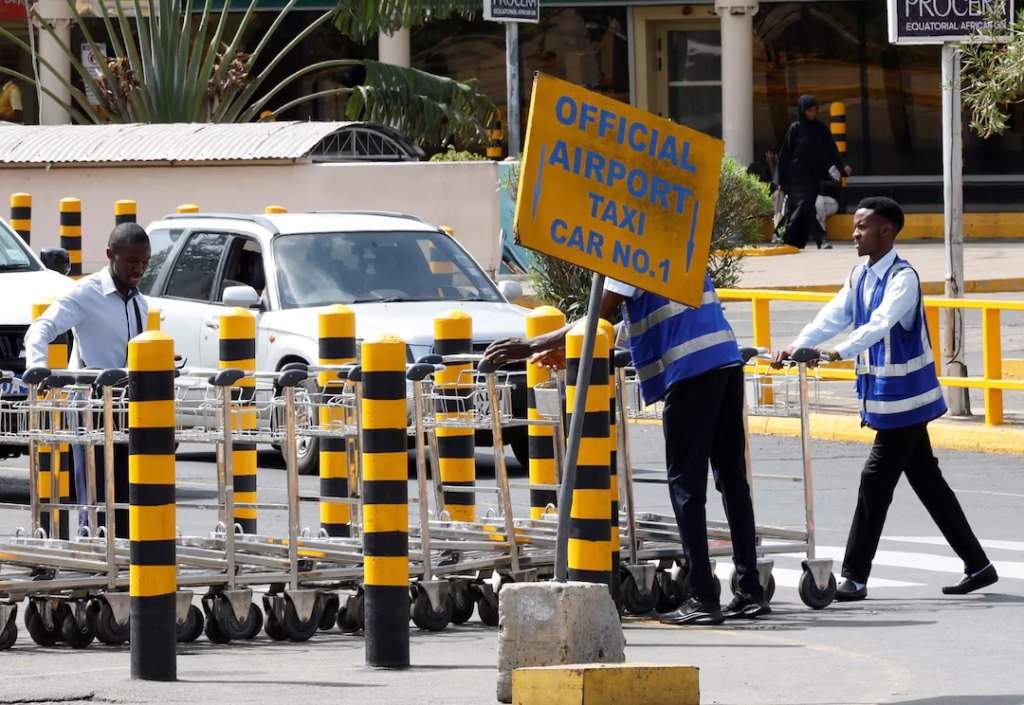
Chaos at Kenya’s Main Airport; Flights Delayed and Cancelled
The chaos began when members of the Kenya Aviation Workers Union (KAWU), including air traffic control personnel and other essential staff, initiated an industrial strike on February 16, 2026. Despite a court order attempting to block the action, the union pressed ahead, citing unresolved grievances tied to conditions of service, delayed wage negotiations and stalled collective bargaining talks with the Kenya Civil Aviation Authority (KCAA).
Disruptions were swift and widespread: departures and arrivals at JKIA experienced delays of up to six hours, while several international and regional flights were outright cancelled. Airlines like Kenya Airways and Tanzania’s Precision Air reported significant operational interference due to the go‑slow tactics that accompanied the strike.
The knock‑on effects stretched beyond Nairobi. Smaller airports across Kenya, including Kisumu International Airport, reported stranded passengers and slowed services as aviation workers’ actions reverberated nationally.
Chaos at Kenya’s Main Airport as Travelers Left in Limbo
Thousands of passengers were caught in the midst of the airport turmoil. Hundreds remained stranded in terminal departure halls, forced to seek alternative travel arrangements or await new schedules. Numerous travelers reported waiting for hours with limited communication from airline or airport authorities.
International visitors were among those affected. Reports highlighted several foreign nationals, including large groups of Indian and Ghanaian travelers stuck without clarity on flight statuses, underscoring the chaos’ global ripple effects.
One Ghanaian passenger described the ordeal as “unfortunate but understandable,” acknowledging the workers’ right to demand better conditions even amid widespread disruption.
Government and Union Reach Breakthrough on Chaos at Kenya’s Main Airport

Rising pressure from airlines, passengers and industry bodies led to expedited mediation between KAWU, government officials and aviation authorities. Transport Cabinet Secretary Davis Chirchir convened talks involving the Ministry of Transport, Ministry of Labour, KCAA and the Kenya Airports Authority (KAA), culminating in a return‑to‑work agreement on Tuesday.
Under the deal, aviation workers agreed to suspend their strike and resume duties, paving the way for operations to restart. The resolution followed intense negotiations addressing pay, working conditions and the terms of a formal return to bargaining discussions.
Transport authorities emphasized the importance of maintaining stability in the aviation sector. Mr. Chirchir said the government remains committed to preventing similar disruptions and protecting Kenya’s reputation as a key global travel hub.
Industry Response to Chaos at Kenya’s Main Airport
Kenya Airways, the nation’s flagship carrier, issued a public update assuring customers that flight schedules would be normalized within 24 hours as operations resumed. The airline reiterated that passenger safety, comfort and timely communication remain top priorities amid the unwinding of the disruption.
Other aviation interests including the Kenya Airline Pilots Association, expressed ongoing concerns about operational safety during sudden strikes, stressing the need for stronger frameworks to safeguard air traffic management continuity.
Public Reaction and Wider Impacts to Chaos at Kenya’s Main Airport
Public reaction to the chaos at Kenya’s main airport was mixed. Many travelers lamented the lack of real‑time communication and contingency planning, while others voiced support for workers’ efforts to improve working conditions. Social media platforms were flooded with photos and accounts of long queues, missed connections and frustrated passengers.
Local businesses reliant on airport traffic from hotel shuttles to hospitality services — reported losses due to reduced passenger flow. Regional tourism advocates warned that repeated disruptions could tarnish Kenya’s image as a reliable destination for international travel. Experts now urge investment in infrastructure, staff engagement and crisis response planning to maintain JKIA’s competitiveness.
Looking Ahead: Stability in Kenya’s Aviation Sector

With operations largely resuming at JKIA and other airports, short‑term stability appears restored. However, aviation stakeholders now face the complex task of rebuilding traveler confidence and ensuring that labor disputes are resolved through proactive dialogue rather than reactive stand‑offs.
As Kenya continues to position itself as a pivotal connector in global air travel, the events of this week underscore that operational resilience and workforce morale are equally critical to its long‑term success.
Chaos at Kenya’s main airport this week exposed vulnerabilities in the aviation sector, as an industrial strike disrupted flights and left thousands stranded. A government‑brokered deal ended the strike after two days, allowing operations to resume. Going forward, Kenya’s aviation authorities and unions will need to strengthen dispute mechanisms and communication channels to prevent similar disruptions and maintain confidence in Africa’s key air transport hub.