
The latest bitcoin liquidation shock has sent a fresh wave of caution through global financial markets after Bitcoin plunged toward $89,000, triggering more than $1 billion in forced liquidations within a single day. While sharp crypto price swings are not new, the scale and speed of this move reveal how fragile risk appetite has become amid rising geopolitical tension, tightening financial conditions, and overstretched investor positioning.
This episode matters because it highlights how cryptocurrency markets are increasingly intertwined with global macro forces rather than isolated speculative bubbles. As Bitcoin reacts to shifts in trade policy, bond yields, and broader investor sentiment, the consequences ripple outward, affecting households, leveraged traders, fintech firms, and even traditional businesses exposed to digital assets.
Why the bitcoin liquidation shock escalated so fast
At the core of the sell-off was excessive leverage. Data showing that roughly 92% of liquidations came from long positions reveals how aggressively traders had positioned for continued price gains. When Bitcoin slipped below key psychological levels, exchanges automatically closed positions that no longer met margin requirements, accelerating losses in a self-reinforcing cycle.
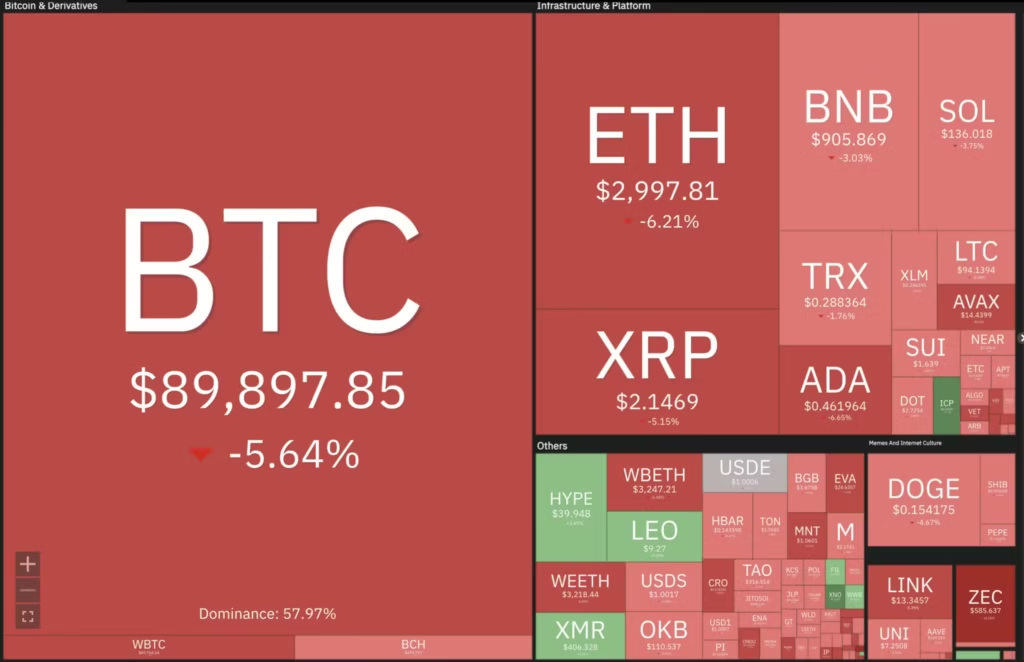
This dynamic exposes a structural vulnerability in crypto markets: when optimism becomes crowded, even modest price declines can snowball into violent sell-offs. The liquidation cascade was not caused by crypto-specific news alone but by a sudden shift in global risk sentiment. Renewed tariff threats from the U.S. administration and a sell-off in Japanese government bonds pushed global yields higher, making speculative assets less attractive.
In practical terms, this shows that crypto is now behaving more like a high-beta risk asset than a standalone alternative financial system. Once macro stress emerges, leveraged crypto positions are often among the first casualties.
How the bitcoin liquidation shock affects households
For households, the impact goes beyond headline price drops. Retail investors increasingly access crypto through leveraged products, perpetual futures, or borrowing against holdings. When liquidations occur, losses can exceed initial expectations, wiping out savings that some households had earmarked for education, housing deposits, or emergency funds.
The psychological effect is equally significant. Sudden forced losses undermine confidence, discouraging long-term participation and increasing mistrust in financial innovation. This can slow broader adoption of blockchain-based financial tools, particularly among middle-income earners who are more sensitive to volatility.
There is also an indirect spending effect. When household wealth contracts, even temporarily, consumer spending often slows. In economies where crypto ownership has grown rapidly, sharp market downturns can reduce discretionary spending, affecting sectors such as retail, travel, and digital services.
For policymakers, episodes like this complicate financial oversight. While crypto markets operate outside traditional banking systems, widespread retail exposure means shocks can still spill into the real economy through confidence and consumption channels.
What the bitcoin liquidation shock signals for businesses
Businesses connected to crypto, exchanges, payment platforms, mining firms, and fintech startups face immediate operational consequences. Elevated volatility increases risk-management costs, raises margin requirements, and can reduce trading volumes after the initial liquidation wave subsides.
For publicly listed companies holding Bitcoin on their balance sheets, sharp drawdowns introduce earnings volatility and investor scrutiny. Accounting write-downs can weigh on stock prices, while risk-averse investors may demand greater transparency around digital asset exposure.
Even companies outside the crypto sector are affected indirectly. The sell-off reflects tightening global financial conditions, higher yields, and declining appetite for speculative investment. That environment can raise borrowing costs, slow venture funding, and reduce capital availability for expansion.
At a broader level, the event reinforces the growing link between crypto markets and traditional finance. As digital assets respond to geopolitical risk and bond market stress, businesses can no longer treat crypto volatility as an isolated phenomenon.
Why this moment matters now
The significance of this sell-off lies not only in the dollar value of liquidations but in what it reveals about market structure. The bitcoin liquidation shock underscores how fragile confidence becomes when leverage builds up during extended rallies. It also shows that crypto markets are increasingly exposed to the same macro forces shaping equities, bonds, and currencies.
For households, the lesson is clear: leverage magnifies both opportunity and risk. For businesses, the message is strategic, crypto exposure must be managed with the same discipline applied to other volatile assets. And for markets as a whole, the episode serves as a reminder that rapid innovation does not eliminate the fundamentals of risk.
Read also: Explosive Bitcoin Market Volatility 2026 Surges After Trump’s Greenland Threat Sparks Global Shock