

Zimbabwe Ban: 2026 Mineral Export Shock

Zimbabwe’s government has enacted a sweeping 2026 Zimbabwe ban on the export of all raw minerals and lithium concentrates, a landmark policy move that took effect immediately on February 25 and has triggered ripples across markets, mining sectors and regional economies.
The suspension, announced by the Ministry of Mines and Mining Development, applies even to consignments already in transit and will remain in place until further notice. Officials emphasize the measure serves “national interest,” aimed at bolstering in-country processing, improving accountability and cracking down on long-standing sector leakages.
What Zimbabwe’s Export Ban Entails
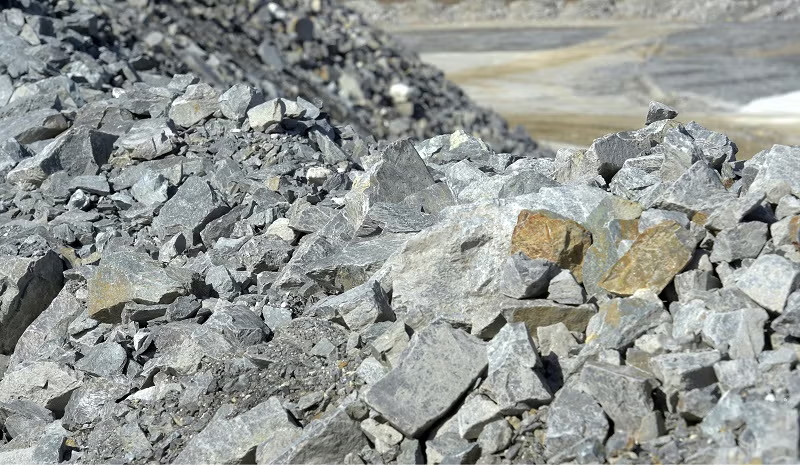
Under the new directive, every raw mineral, from lithium and gold to platinum and gemstones is barred from leaving the country in unprocessed form. The ban encompasses:
- All raw minerals and concentrates currently awaiting shipment, including lithium.
- Only producers with approved beneficiation facilities and valid mining titles may apply for future export clearance.
- Agents and third-party traders are banned from exporting on behalf of miners.
Mines Minister Polite Kambamura told journalists in Harare that the Zimbabwe ban was driven by a desire to capture more value from minerals before exiting the country, enhance transparency and plug persistent smuggling of resources via unofficial routes.
Why This Ban Matters
The stakes are high. Zimbabwe is Africa’s leading lithium producer, alongside vast deposits of platinum, chrome and other strategic minerals critical components in global battery production and green technologies. In 2025, Zimbabwe exported more than 1.12 million metric tons of lithium-bearing spodumene concentrate, largely to China.
Economists and policy analysts point to several core motivations behind the Zimbabwe ban:
- Value-retention push: The state wants processing and refining operations onshore to retain greater economic returns.
- Leakage control: Illegal export channels and under-declared shipments have cost revenue and undermined governance.
- Market leverage: With soaring global demand for transition minerals, Zimbabwe aims to renegotiate its position in supply chains.
Market Reaction: Winners and Losers
The announcement sent lithium and mining stocks sharply higher on global exchanges:
- Canada’s Sigma Lithium jumped over 20%.
- U.S.-based Albemarle climbed 6-7%.
- Chile’s Sociedad Quimica y Minera saw gains near 5%.
Analysts describe this surge as a classic supply shock, reducing available raw material quantities overnight and tightening global markets for lithium products used in electric vehicles and renewable energy storage.
However, industry groups warn of short-term disruption, especially for firms that have not yet invested in local processing infrastructure. Smaller miners reliant on export revenues are now racing to meet new compliance and beneficiation benchmarks, or face being frozen out of international trade.
Industry and Stakeholder Responses
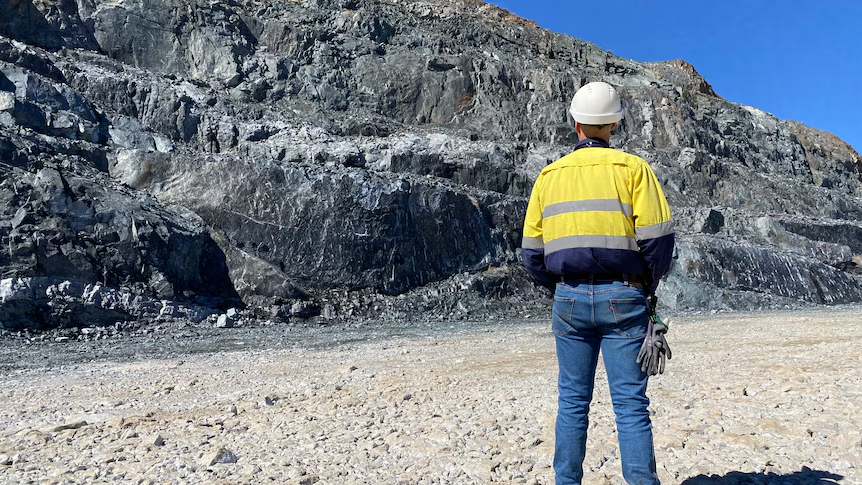
Mining operators and trade bodies have offered mixed reactions:
Supporters of the ban praise Zimbabwe’s strategy to build a value-added mineral economy that goes beyond raw extraction a longstanding goal of regional resource governance advocates.
Critics, however, argue the abrupt implementation without transition incentives could scare off foreign direct investment and slow production growth, especially for capital-intensive lithium operations that may take years to retool.
Public commentary on social platforms and in business circles reflects a broader tension: while citizens applaud efforts to curb corruption and enrich the nation’s resource base, there are fears about enforcement consistency and impacts on jobs tied to mining towns.
Broader Economic Implications
Beyond mining, the Zimbabwe ban underscores a broader narrative in African resource policy: countries endowed with key mineral assets are increasingly demanding greater control and local beneficiation rather than exporting low-grade raw materials.
This trend, mirrored in other mineral-rich nations spots light on sovereignty over natural resources, domestic industrialisation, and global supply chain recalibration.
For Zimbabwe, which has battled economic challenges including currency volatility and external debt, the Microsoft-style pivot towards industrial upgrading and beneficiation could be transformative if executed with careful industry engagement and infrastructural support
Conclusion: Zimbabwe Ban Marks a Strategic Turning Point
The Zimbabwe ban on raw mineral and lithium exports represents one of the most significant shifts in African resource policy in 2026. By forcing the hand of mining producers and global buyers alike, the government seeks to reshape its economic future and assert greater value capture from its mineral wealth.
While market volatility and operational challenges loom, the policy may ultimately propel Zimbabwe up the value chain turning raw resources into refined economic opportunity, rather than export dependency.
As the world watches closely, this Zimbabwe ban could signal a new era of resource nationalism and industrial ambition across mineral-rich nations.

