

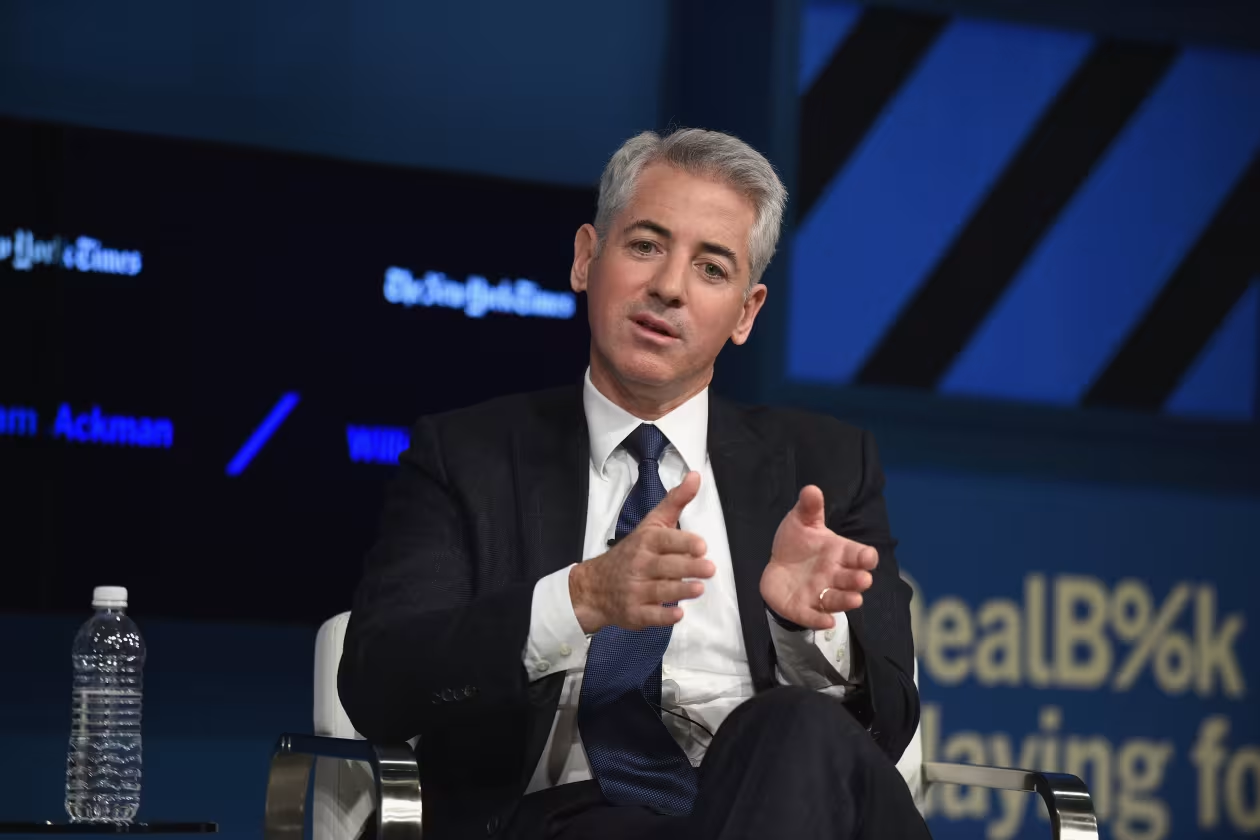
Billionaire hedge fund manager Bill Ackman has publicly called on President Donald Trump to adjust his economic strategy, warning that aggressive trade policies could pose serious risks to the U.S. economy. Ackman, the founder and CEO of Pershing Square Capital Management, voiced concerns that sweeping tariffs may undermine business confidence, slow investment, and destabilize financial markets at a critical time for economic growth.
Ackman, who supported Trump’s return to the White House, emphasized that his criticism is rooted in long-term economic stability rather than political disagreement. While he acknowledged the administration’s objective of correcting unfair trade practices and strengthening domestic manufacturing, he cautioned that the current tariff approach may produce unintended consequences that outweigh its intended benefits.

Concerns Over Broad Tariffs and Market Confidence
At the center of Ackman’s concerns is the administration’s push for reciprocal tariffs on imports from major trading partners. According to Ackman, the scale and speed of these measures have created uncertainty across global markets. Businesses, he argues, are increasingly hesitant to commit capital when faced with unpredictable trade costs and potential retaliation from other countries.
Market confidence, a key driver of economic expansion, can quickly erode when policies are perceived as abrupt or overly aggressive. Ackman warned that prolonged uncertainty could lead companies to delay hiring, reduce expansion plans, and conserve cash instead of investing in innovation and productivity. Such behavior, he noted, could slow economic momentum and weaken U.S. competitiveness.
Call for a Strategic Pause
Rather than abandoning trade reform altogether, Ackman has urged President Trump to consider a temporary pause or recalibration of tariff implementation. A more measured approach, he believes, would allow policymakers to engage in negotiations without inflicting unnecessary harm on businesses and consumers.
Ackman suggested that a strategic pause could help stabilize markets while preserving the administration’s leverage in trade talks. By reducing immediate pressure on supply chains and input costs, companies would gain clarity and confidence, supporting continued investment and job creation. This approach, he argued, would better align with the broader goal of sustaining long-term economic growth.
Balancing Trade Reform and Economic Stability
Ackman has consistently stated that addressing trade imbalances is a legitimate and important policy objective. However, he stressed that successful economic leadership requires balancing reform with stability. Policies designed to protect domestic industries must also consider their downstream effects on inflation, consumer prices, and corporate profitability.
Tariffs often increase costs for U.S. manufacturers that rely on imported materials, which can ultimately be passed on to consumers. Ackman warned that higher prices could dampen consumer spending, a key pillar of the U.S. economy. In his view, protecting economic confidence is just as important as enforcing fair trade rules.

A Broader Debate Among Business Leaders
Ackman’s comments reflect a growing debate among prominent investors, economists, and corporate executives. While many support stronger enforcement of trade agreements, there is increasing concern that broad, unilateral measures could strain alliances and disrupt global commerce.
Several business leaders have echoed Ackman’s call for clarity and predictability in economic policy. Stable rules and transparent timelines, they argue, are essential for long-term planning and sustained growth. Without them, the risk of volatility increases, potentially affecting stock markets, employment, and consumer sentiment.
Implications for Investors and the U.S. Economy
For investors, Ackman’s remarks highlight the close relationship between policy decisions and market performance. Trade uncertainty can trigger volatility across equities, currencies, and commodities, making risk management more challenging. A shift toward a more deliberate trade strategy could help calm markets and restore confidence among institutional and retail investors alike.
From a broader economic perspective, Ackman’s warning underscores the importance of maintaining trust in the United States as a reliable and predictable economic partner. Global confidence in U.S. leadership has long supported capital inflows, strong financial markets, and economic resilience. Preserving that trust, he argues, should be a top priority.
Looking Ahead
As President Trump continues to shape his economic agenda, voices like Bill Ackman’s are likely to play an influential role in the public conversation. The debate is not about whether to pursue trade reform, but how to do so without jeopardizing economic stability.
Ackman’s message is clear: decisive leadership must be paired with strategic restraint. By refining its tariff approach, the administration has an opportunity to protect American interests while sustaining growth, confidence, and global credibility in an increasingly interconnected economy.

