Senegal Prime Minister Sparks Fierce Debate With Hardline 2026 Agenda

In a turbulent year marked by social unrest and economic strain, Senegal prime minister Ousmane Sonko has emerged as one of the most polarising figures in West African politics. From proposing draconian changes to laws targeting LGBTQ+ individuals to denouncing neighbouring Morocco’s handling of Senegalese football supporters, Sonko’s actions in early 2026 are igniting heated debate at home and abroad.
Shortly after presenting himself as Senegal’s “guardian of the revolution,” Sonko has intensified his focus on domestic legislation and diplomatic challenges, thrusting the prime minister’s office into the centre of national controversy
Bold Anti-LGBT Legislative Push Ignites Backlash
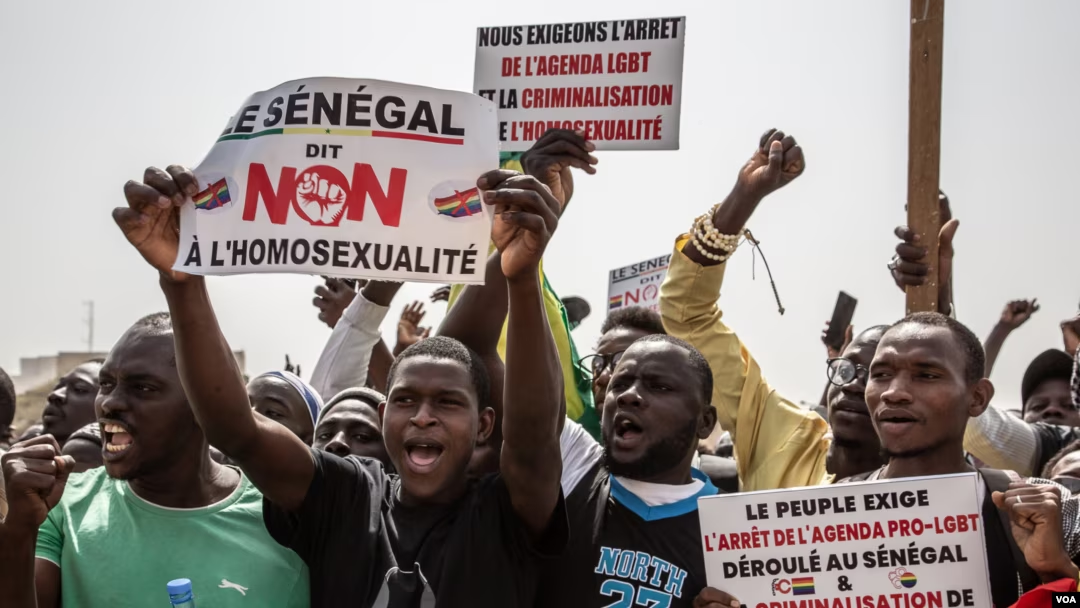
In late February 2026, Senegal prime minister Ousmane Sonko tabled legislation aimed at toughening the nation’s already strict laws on same-sex relations. The draft bill proposes doubling the maximum prison sentence from five to ten years for consensual same-sex conduct, with fines of up to 10 million CFA francs (approximately $18,000) and harsher penalties for advocacy or confirmation of such relations.

Speaking to legislators, Sonko framed the bill as a rejection of “Western influence” and an assertion of Senegal’s conservative values, arguing that harsher sentencing is necessary to reflect national moral standards. However, human rights advocates have decried the move as a further assault on already vulnerable LGBTQ+ communities. Human Rights Watch warned that the legislation could fuel stigma and violence against individuals who are already heavily marginalised.
The controversial proposal has drawn mixed reactions within Senegal, with some conservative groups applauding the government’s stance and others, including opposition leaders and civil liberties organisations, condemning it for undermining human rights. The bill has passed to Parliament for debate, but a vote date has yet to be announced.
Reaction to AFCON Sentencing Strains Diplomatic Ties
On the diplomatic front, the Senegal prime minister strongly criticised recent actions by a Moroccan court that sentenced 18 Senegalese supporters to jail terms of three months to one year following crowd disturbances at the 2025 Africa Cup of Nations final in Rabat.
Addressing Senegal’s National Assembly, Senegal prime minister, Sonko expressed deep regret over the affair, saying it “goes beyond the realm of sport” and placed strain on relations between two historically friendly nations. He urged Moroccan authorities, including the king, to consider pardoning the supporters, and hinted that bilateral agreements might be invoked to seek their transfer back to Senegal.
This diplomatic rebuke comes at a time when Senegal is seeking to maintain strong regional ties despite internal pressures, illustrating the balancing act between domestic politics and international relations faced by Sonko’s government.
Economic Friction and Unrest Amid Looming Debt Crisis
Beyond social and foreign policy issues, Senegal’s government continues to grapple with mounting economic challenges. Senegal’s finance minister reported fundamental disagreements with the International Monetary Fund (IMF) over terms for a new lending programme, reflecting ongoing concerns about the nation’s fiscal trajectory.
The IMF negotiations follow the suspension of a prior $1.8 billion program after revelations of significant undisclosed debt under Senegal’s previous administration pushed public debt to approximately 132 % of GDP. Although the government insists it remains current on its obligations, the economic burden is palpable, with protests, budget cuts and even a student’s death during demonstrations underscoring growing frustration among younger citizens.
Prime Minister Sonko has publicly stressed that any IMF agreement must serve Senegal’s interests, yet unresolved fiscal tensions continue to fuel labour strikes and public dissatisfaction. The administration’s stance on financial sovereignty is juxtaposed with calls for strategic reform and economic stability.
Public and Political Responses: A Nation Divided
Public reaction to Sonko’s initiatives is sharply divided. Conservative supporters praise his firm stance on moral and national issues, while rights groups and opposition voices argue that his hardline policies undermine Senegal’s commitments to human rights and democratic openness.

International observers and local analysts alike note that Sonko’s governance style, once rooted in anti-establishment activism, now faces scrutiny as he implements controversial policies from the helm of government. For many Senegalese, especially youth mobilised behind the current leadership in 2024, the rising economic and social strains are testing confidence in the government’s capacity to deliver promised reforms.
Looking Ahead: Stability or Continued Tension?
As Senegal moves further into 2026, the spotlight remains firmly on the Senegal prime minister. With parliamentary debates on contentious legislation ahead and negotiations with international financial institutions ongoing, Sonko’s leadership will likely continue to shape the nation’s political and social landscape.
Whether his approach fosters a new era of sovereign governance or exacerbates internal divisions remains to be seen.