Inside Relooted: The Heist Game
Set in the year 2099, Relooted invites players into a near-future world where promises to return stolen African treasures are quietly unraveling. Western museums exploit loopholes in the Transatlantic Returns Treaty, prompting a fictional team to reclaim what was taken. This African-futurist heist game blends speculative storytelling with historical grievances, creating an immersive experience that challenges conventional narratives of ownership and heritage.
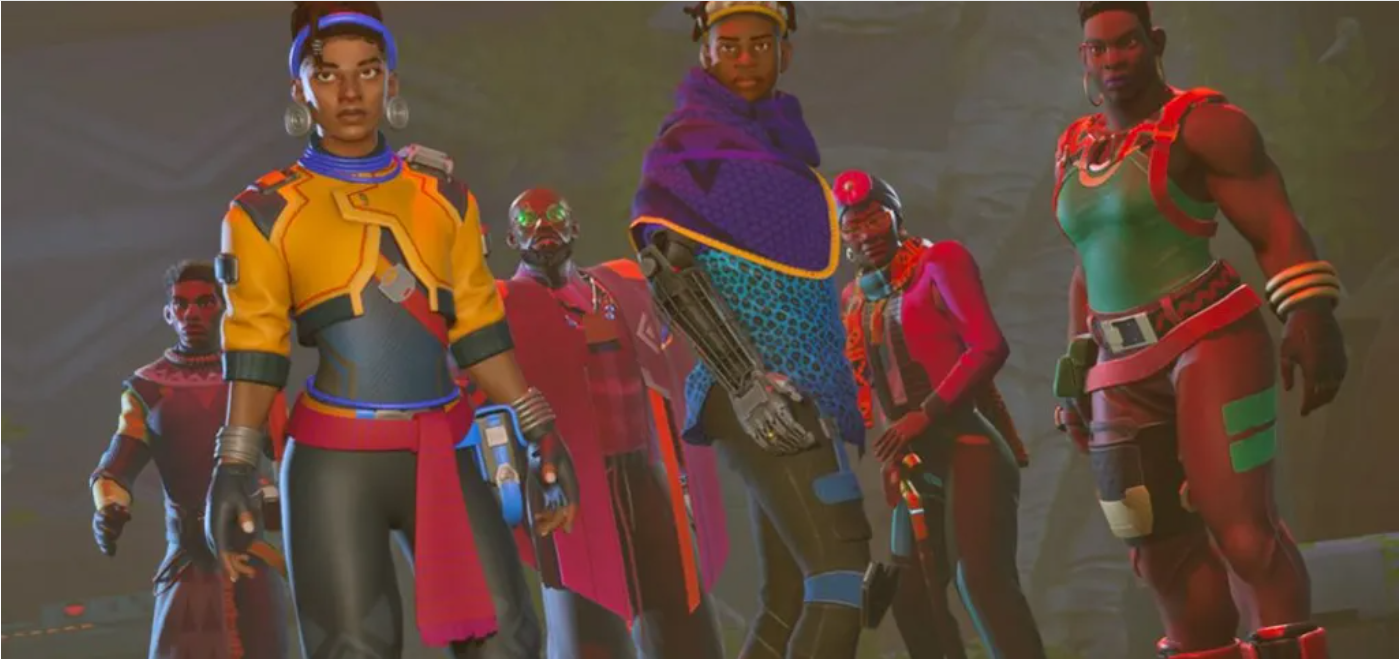
Relooted centres on Professor Grace, a South African artefacts expert frustrated by the treaty’s latest amendment, which requires only publicly displayed objects to be returned. Museums respond by removing contested items from view and placing them in storage. Refusing to accept this reversal, Grace recruits her grandchildren, Nomali and Trevor, and a former student, Etienne, to carry out daring retrievals from museums and private collections across the Western world.

Although framed as a heist, Relooted departs sharply from genre conventions. There is no financial reward, no criminal past, and no violence. Instead, the characters are driven by shifting legal barriers and moral urgency. “Nomali reluctantly agrees to the first heist to prove how dangerous the whole thing is,” the game’s narrative director, Mohale Mashigo, told the BBC. “She would do anything for her family, and she joins them to protect them from the real risks involved.”
Players experience the story through Nomali, a sports scientist and renowned parkour athlete. Her agility allows her to run, leap, climb and vault through complex environments while recovering 70 sacred and cultural African objects. Trevor, a specialist in locks and security systems, manages access and escape routes, while Etienne, a Belgian-British insider, provides intelligence. The wider team reflects a pan-African vision: Ndedi from Cameroon handles acrobatic escapes, Cryptic from Kenya hacks security networks, and Fred, a Congolese engineer, designs gadgets and getaway vehicles.
As the plot unfolds, additional characters appear, deepening both the gameplay and the story. The game is developed by Nyamakop, a South African studio known for Semblance, the first African-made title to launch on a Nintendo console in 2018. Relooted brings together designers and voice actors from Nigeria, Angola, Malawi, Ethiopia, Tanzania and Kenya, underscoring its continental scope.
Nyamakop chief executive Ben Myres hopes the title marks the beginning of a portfolio of African-inspired games for global audiences. Built for PCs and consoles using motion capture and animated cinematics, Relooted is unlikely to reach large numbers of players on the continent, where smartphones dominate gaming due to cost. Its core audience is the African diaspora, though the developers believe its themes resonate more broadly.
“Taking back cultural artefacts that were looted is something many people hope for and fantasise about,” said project manager Sithe Ncube, who is from Zambia. Myres conceived the idea during a visit to London after his mother saw the Nereid Monument at the British Museum, a tomb transported stone by stone from Turkey in the 19th century. Her reaction, he recalled, was simple: it should be a game.
Rather than buildings, the developers focused on artefacts, allowing for dynamic gameplay. In deliberate contrast to the violent histories behind many acquisitions, Relooted relies on puzzles, teamwork, athletic skill and strategic thinking. Once recovered, objects are delivered to the Museum of Black Civilizations in Dakar, Senegal, envisioned as a temporary hub before eventual return to their communities.
The artefacts are drawn from real history, primarily from the late 19th and 20th centuries. They include vigango grave markers from Kenya and Tanzania, stolen to meet Western demand in the 1980s and 1990s, and Dogon artworks taken from Mali. Players also pursue Kabwe 1, or Broken Hill Man, a 300,000-year-old skull discovered in present-day Zambia and held in London since 1921.
Other targets include the Asante Gold Mask, looted during the British destruction of Kumasi in 1874 and now in the Wallace Collection, and the Ngwi Ndem, or Bangwa Queen, removed from Cameroon in 1899. The sculpture, sacred to the Lebang people, symbolises ancestry, fertility and protection. Despite formal requests, its current owner in France has shown no intention of returning it.
While demands for repatriation, such as those for the Benin Bronzes, date back to the 1930s, significant returns only began in 2021 and remain limited. Nyamakop stresses that Relooted is foremost entertainment, but also an exercise in awareness. By requiring players to actively engage, learn and explore, the game aims to leave them with a deeper understanding of African history, cultural loss and creative possibility.