

U.S Troops in Nigeria: New Deployment Marks Strategic Shift in Counter-Terrorism Efforts
The deployment of U.S troops in Nigeria is intensifying as Washington expands its role in supporting Abuja’s counter-terrorism campaign. In recent days, roughly 100 U.S. military personnel have landed in northern Nigeria to train, advise and share intelligence with the Nigerian Armed Forces in their long-running fight against radical Islamist groups and armed gangs. This new phase of cooperation reflects a strategic pivot in U.S. regional security policy and has ignited both praise and concern among local communities and analysts alike.
What the US Troops in Nigeria Deployment Entails
U.S. Forces Arrive on Training Mission
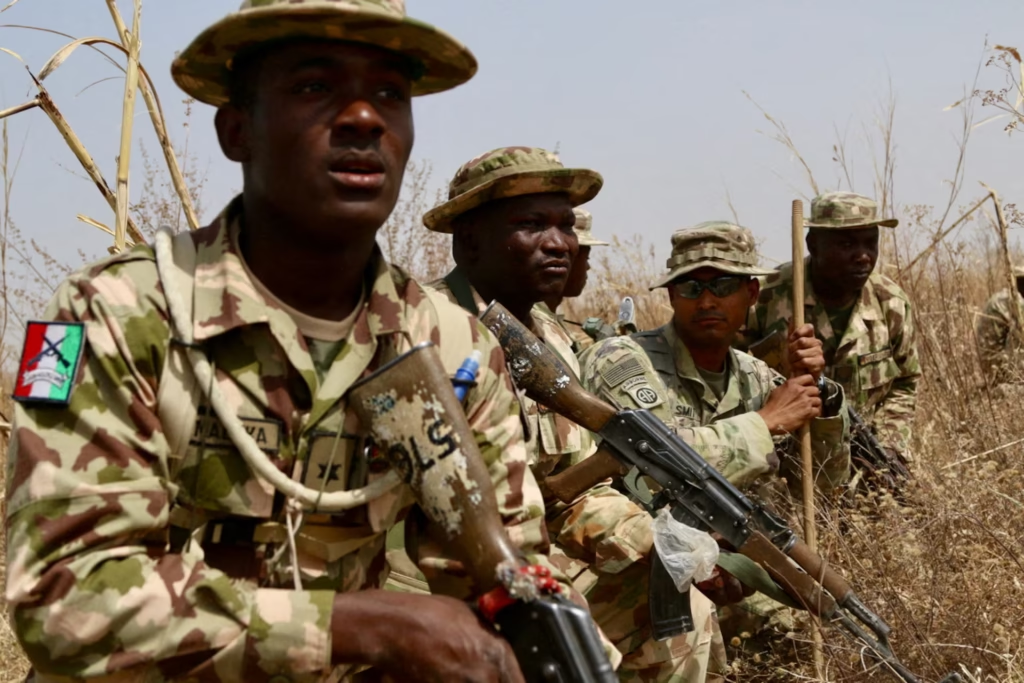
According to official Nigerian military statements, approximately 100 U.S. troops and associated equipment touched down in Bauchi State following a formal request from the Nigerian government. The personnel are described as technical specialists focused on training, advising and intelligence sharing, not direct combat operations. All missions will operate under the authority and coordination of Nigerian command structures.
Officials stress the U.S. contingent’s role is to bolster Nigerian capacity to identify and neutralise extremist groups, enhance surveillance capabilities, and provide tactical guidance in complex threat environments. Joint training exercises and intelligence collaboration are expected to commence imminently.
Expanded Support Planned
This initial deployment is part of a larger commitment that could see up to 200 U.S. troops in Nigeria over the coming weeks, according to U.S. defence sources. These forces are expected to supplement the existing team of officers already embedded with Nigerian units and extend cooperation across multiple operational fronts.
Context: Rising Insurgency and Strategic Imperatives
A Surge in Extremist Violence
Nigeria has grappled with violent insurgencies for nearly two decades, with groups like Boko Haram and the Islamic State West Africa Province (ISWAP) still active, particularly in the northeast. Recent attacks by multiple armed factions underscore the ongoing instability that has claimed thousands of lives and displaced many more.
The deployment of U.S troops in Nigeria follows a series of security collaborations that include airstrikes against IS-linked militants in late 2025 and small team advisory missions earlier this year, underscoring Washington’s renewed focus on the Sahel and West Africa as hotbeds of extremist activity.
Strategic U.S. Interests
U.S. Africa Command (AFRICOM) views Nigeria’s security as integral to wider regional stability. With the Sahel witnessing persistent extremist expansion and humanitarian crises, American military cooperation is aimed at preventing terrorist safe havens, protecting critical infrastructure and supporting allied African nations.
Officials familiar with the planning note that this deployment of U.S troops in Nigeria reflects long-term strategic interest rather than episodic intervention, incorporating training, intelligence fusion and logistical support to strengthen partner capacity.

Public and Local Reactions
Mixed Responses in Nigeria
The arrival of U.S troops in Nigeria has prompted mixed reactions across the country. Some local leaders and security analysts welcome the assistance, hoping enhanced training and intelligence support will mitigate extremist threats and reduce civilian casualties.
However, others express concerns about sovereignty and perceived foreign influence, especially in light of past diplomatic tensions. These tensions were heightened after former U.S. President Donald Trump criticised Nigeria’s protection of religious minorities and designated the country as a “Country of Particular Concern” under U.S. human-rights statutes, a claim strongly denied by Nigerian authorities.
Religious and Political Implications
The debate over U.S. involvement also has religious and political dimensions. Advocacy groups in the U.S. lobbied for a stronger response to attacks on Christians in Nigeria, influencing congressional discussions on military cooperation. Critics argue that foreign troops risk exacerbating inter-communal tensions if not clearly and carefully aligned with Nigeria’s own multifaith communities.
Next Actions on U.S Troops In Nigeria

Training, Intelligence and Regional Impact
The near-term focus will be on delivering targeted training and operational insight to Nigerian units engaged in complex counter-insurgency campaigns. Analysts anticipate this could improve intelligence fusion, rapid response planning, and precision targeting against armed groups, which have adapted to traditional military tactics.
Monitoring Public Sentiment
Public opinion in Nigeria will likely shape the durability of this cooperation. While some communities may welcome enhanced security, others may demand clear transparency and assurances against foreign misuse of military assets. How Abuja navigates these sentiments will affect both the scale and scope of future U.S. involvement.
Final Takes on U.S Troops In Nigeria
The arrival of U.S troops in Nigeria marks a significant moment in bilateral defence cooperation, driven by shared concerns over rising extremist violence. While the initial deployment focuses on training and technical support rather than combat, its implications could reshape Nigeria’s counter-terror strategy and U.S. influence in West Africa. As both countries move forward, transparent engagement with local communities and clear strategic objectives will be critical to achieving tangible security outcomes.

