Table of Contents
Spotify Faces Rising Backlash Over CEO’s Investments
Spotify is facing mounting criticism after revelations that its CEO, Daniel Ek, has invested heavily in a company that supplies artificial intelligence (AI) technology to European militaries. The controversy has already triggered several high-profile artists to pull their music from the platform, while frustrated users are cancelling their subscriptions in protest.
Though the number of cancellations may not yet dent the company’s revenue, the move underscores a growing trend: consumers increasingly judge tech giants not only by their services but also by the personal and corporate values of their leaders.
Key Figures Driving the Debate
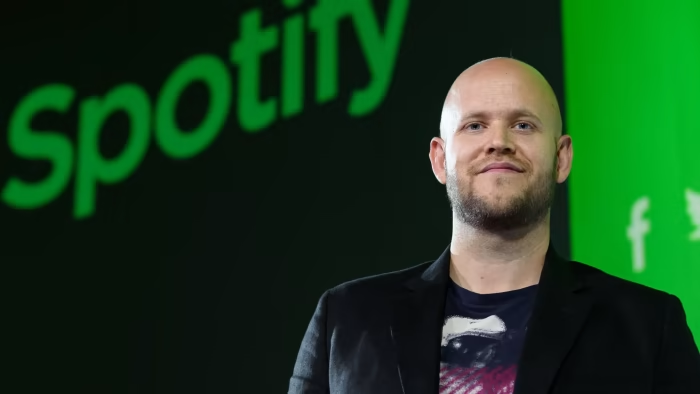
The uproar centres on Daniel Ek, co-founder and CEO of Spotify, whose AI investment in defence technology has fueled ethical concerns among both artists and users.
Several musicians have already withdrawn their tracks, sending a strong signal that they don’t want their creative work associated with a platform whose leadership profits from military AI investments. Meanwhile, Spotify subscribers across Europe and beyond are taking to social media to announce their cancellations.
Experts such as Professor Ibo van de Poel from Delft University of Technology emphasize that user actions, while symbolic, carry ethical weight. “If my money ends up with a company where things happen that I don’t support, then it’s still related,” he explained.
Why This Matters
At first glance, individual subscription cancellations may appear insignificant to a corporation as large as Spotify. But experts argue that such symbolic actions can build momentum and shape broader public debates.
Wouter Nieuwenhuizen, a researcher at the Rathenau Institute, noted:
“It’s about societal trends. If a large group drops out, a debate can arise that will resonate with the company.”
Indeed, history shows similar consumer movements. Users fled WhatsApp in droves after its controversial data policy update, flocking to privacy-first apps like Signal. Likewise, Elon Musk’s takeover of Twitter drove many disillusioned users toward alternatives like Mastodon and Bluesky.
These moments highlight how digital platforms are not just tools but reflections of values, trust, and societal influence.
Principles Versus Practicality
For some, leaving Spotify is less about immediate consequences and more about personal ethics. As Professor Van de Poel explains, people can judge their actions “not only by their consequences, but also by their principles.” Cancelling a subscription may therefore serve as a declaration of values, regardless of whether it significantly impacts Spotify’s finances.

Still, leaving isn’t always simple. With social networks like Twitter or Facebook, the “network effect” makes it harder to depart since users risk losing connections, followers, and communities. Music platforms, however, are less socially binding, making exits from Spotify somewhat easier.
Voices From the Debate
Critics argue that Spotify risks alienating both artists and subscribers if it fails to address concerns about ethical alignment. Supporters of subscription boycotts insist the act is about more than music access; it’s about signalling values in a digital economy.
As one user shared online:
“Cancelling my Spotify account might not change the company’s bottom line, but it changes mine. I don’t want to fund what I don’t believe in.”
What Lies Ahead
The controversy raises important questions: Should CEOs’ personal investments be judged separately from the companies they run? Or do their private actions inevitably reflect on the platforms that millions rely on daily?
While Spotify remains dominant in global music streaming, the incident highlights growing consumer scrutiny of tech leaders. If more artists and users view ethical alignment as essential, subscription-based services could face increasing pressure to uphold not just performance standards but also moral responsibility.
In the end, cancelling Spotify may not topple the company. But the movement signals something larger, a shift toward holding digital platforms accountable, not just for the services they deliver but for the values they embody.
Read also: Sam Altman Hails India’s AI Boom as OpenAI Announces First Office in Delhi