

Safest Cities in Africa 2026: What Latest Data Reveals About Urban Safety Across the Continent
As Africa’s urban population continues to expand, residents, investors, and international visitors alike are increasingly focused on where safety and security remain strongest. The safest cities in Africa for 2026 according to the latest safety index data and urban security trends reveal important patterns in regional stability, local governance, and quality of life.
Recent safest cities in Africa rankings, including metrics from crowd‑sourced databases like Numbeo and regional analyses by international media, point to a clear pattern: North and East African cities dominate top safety positions, while parts of Southern Africa and the continent’s largest megacities face persistent security challenges
North Africa Leads the Safest Cities in Africa Rankings

The 2025 and early‑2026 safety index data shows Alexandria, Egypt topping the list of the most secure urban centers in Africa, earning the highest overall safety score across cities evaluated. With a robust municipal security presence, lower violent crime reports, and active community policing initiatives, Alexandria leads the safest cities in Africa standings.
Following closely behind are cities such as Tunis, Tunisia, and Cairo, Egypt, both entrenched in strong law enforcement infrastructure and relatively stable public environments. These cities benefit from focused urban planning, digital surveillance efforts, and sustained investments in public safety trends often cited by urban experts as central to improving everyday security and livability.
Key Safety Leaders 2025/26
- Alexandria, Egypt – Safety Index ~54.5
- Tunis, Tunisia – ~51.2
- Addis Ababa, Ethiopia – ~50.2
- Cairo, Egypt – ~49.5
- Algiers, Algeria – ~48.8
- Casablanca, Morocco – ~44.7
Index figures reflect crowd‑sourced perceptions of crime and security, not official police statistics.
This northern dominance underscores how political stability, historical investments in public infrastructure, and tourism‑driven security strategies can positively affect metropolitan safety perceptions and experiences
Emerging Safety Trends Beyond the North
While North Africa holds many of the top safety rankings, Addis Ababa, Ethiopia continues to stand out in East Africa. Despite broader political tensions in other parts of the country, the Ethiopian capital’s community policing programs and active civic engagement have kept crime perceptions lower in central districts compared to many other large African cities.

Nairobi, Kenya, appears moderately safe relative to many urban peers, with its safety index reflecting gradual improvements tied to enhanced surveillance and community outreach efforts, though petty crime remains a concern among residents and visitors alike.
Notably, Windhoek, Namibia although scoring lower than North African counterparts is frequently cited in regional safety discussions for relatively consistent urban stability and a lower prevalence of violent crime compared to larger African capitals.
Safety Challenges in Southern and Major Metropolitan Areas

By contrast, many of the least safest cities in Africa are concentrated in Southern Africa and among some of the continent’s biggest economic hubs. South African cities like Pretoria, Johannesburg, Cape Town, and Durban consistently register high crime indexes in contemporary surveys, driven by violent crime, socio‑economic inequality, and systemic law‑enforcement challenges.
In Nigeria, even Lagos a massive economic and cultural centre makes the list of cities with higher crime perceptions, underscoring how rapid urban growth without corresponding public safety infrastructure can strain city governance.
These contrasting safety realities have tangible economic and social impacts. Investors and multinational companies increasingly consult safety rankings when planning expansions, while tourism boards and local governments are keenly aware that perceptions of danger can influence travel inflows and foreign direct investment. Urban analysts note that cities improving their safety frameworks often see associated gains in business climate assessments and liveability scores.
Public Reactions and Social Commentary on the Safest Cities in Africa Top List
Public reaction to these rankings has been mixed. In Ghana, for example, widespread surprise followed when Accra failed to make the top 10 safest cities in Africa, despite Ghana’s strong standing on broader peace and governance indices. Many residents and commentators highlighted the discrepancy between national peace rankings and urban crime perceptions, particularly around petty theft and infrastructure‑related safety concerns.
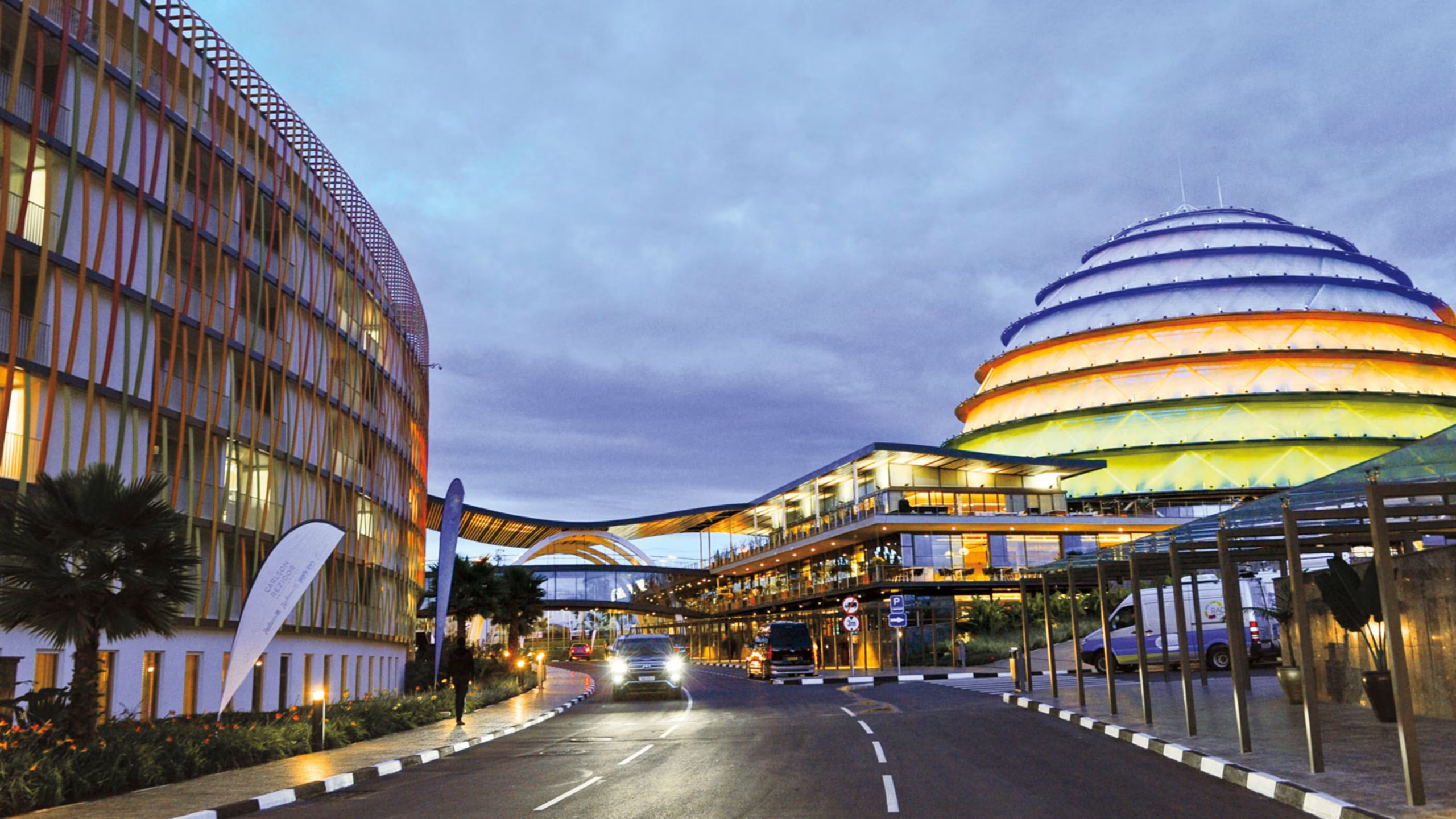
Online forums and community discussions across the continent reflect similar debates. Some residents question whether crowd‑sourced safety ratings based primarily on perceived safety rather than verified crime data fully capture everyday realities. Others point to the absence of cities like Kigali, Rwanda or Gaborone, Botswana from some lists, despite frequent anecdotal accounts of calm, secure urban environments.
Looking Ahead: Urban Safety Strategies for Africa
As African governments and city planners work to enhance safety, experts point to several effective strategies: increased community policing, investment in digital surveillance and street lighting, targeted youth engagement programs, and coordinated public‑private security partnerships.
For cities aiming to climb future safety rankings, investing in data‑driven crime prevention, improving judicial efficiency, and bolstering economic opportunities for young urban populations are seen as foundational steps.
A Diverse Safety Landscape
The story of the safest cities in Africa is one of contrasts with North African cities frequently leading, while Southern and mega‑urban centres confront deep safety challenges. For residents, policymakers, and global audiences, these rankings offer valuable insight into where safety improvements are taking hold and where further interventions are most needed.
As the continent continues its rapid urban growth, robust and inclusive safety strategies paired with transparent data and effective governance will be central to shaping Africa’s future urban success

